Absolutely the same feelings
Author: Sergey Tihon 🦔🦀🦋
F# Weekly #21, 2014
![]() |
![]() |
![]() |
![]() |
Welcome to F# Weekly,
A roundup of F# content from this past week:
News
- Follow @fsharpJobs if you are interested in open F# positions.
- Please vote on issues to guide priorities in core F# compiler/library fixes.
- Visual F# PowerTools v1.1.0 is out with implement interface, record stub generation and major improvements.
- Deedle v1.0 is released!
- Stanford.NLP.Fsharp was re-launched.
- The first pull request for an F# compiler optimization was accepted via the Visual F# repo, congrats to Will Smith.
- WebSharper Binding for Leaflet is released.
- FAKE.Deploy just got an authentication.
- Edgar Sánchez shared one more site for compiling and running F# – www.compileonline.com
- F# helps construction firm bring Jean Nouvel design for Louvre Abu Dhabi to life. Great potential for F# in CAD.
- Jon Harrop shared notes from his lectures.
Video/Presentations
- “FAKE (F# Make) & Automation” by Sergey Tihon.
- “C# light” by Scott Wlaschin.
- “F# and Reactive Programming for iOS” by Brad Pillow.
- “Xamarin.iOS/android+F#” by moonmile.
Blogs
- Howard Mansell posted “Deedle v1.0 Release!“
- Visual FSharp Team published “FSharp.Data.SqlClient: Seamlessly integrating T-SQL and F# in the same code [Guest Post]“.
- Tomas Petricek wrote “Welcome fsharpWorks & upcoming F# events“.
- Daniel Chambers blogged “FSharp.Azure 1.0 – with support for option types“.
- Johan Sivertsen asked about “SqlDataConnection and wasted time” and have got help.
- Jamie Dixon blogged “Association Rule Learning Via F# (Part 2)“.
- James Conway posted “F# – Discount Code for C# Developers“.
- QuantLabs published “F Sharp with DOTNET could be gaining ground in many investment banks“.
- Mauricio Scheffer wrote about “Mapping JSON to objects with Fleece“.
- Mikael Helldén wrote “F# cruise to Vaxholm“.
- Mike Harris posted “Roman Numerals and FsCheck“.
- Steffen Forkmann announced “Changes in the FAKE contribution workflow“.
- TJ Maynes blogged “Setting Up F# In Emacs“.
- Matt Adereth posted “Counting Stars on GitHub“.
- Sacha Barber wrote about:
That’s all for now. Have a great week.
Previous F# Weekly edition – #20
F# Weekly #20, 2014
![]() |
![]() |
![]() |
![]() |
Welcome to F# Weekly,
A roundup of F# content from this past week:
News
- Functional Works site is alive.
- Summer of F# in Paris! Early bird registration for Paris ’14 is open.
- CloudSharper 0.9.10.2 is released: Mono support, VS-compatible solutions, NuGet packages and more!
- Visual F# accepted pull requests ‘make possible to set breakpoint inside quotation‘ and ‘performance improvement for seq.windowed‘.
- F# support is now included by default in Xamarin Studio, no external add-ins are required.
- Ross McKinlay presented a transactional ETL procedure from Excel to SQL server, using only the SqlProvider!
- New F# User Groups map was presented.
- Check FsBlog (Blog aware, static site generation using F#) if you missed it.
- Try FsLab Notebook right now and share you thoughts.
- Santa Monica F# User Group was presented.
- Andre Pemmelaar showed F# repo popularity by region.
- FSharp.Compiler.Service 0.0.48 is released.
- New Visual F# PowerTools feature was presented: Record stub generation.
- FsUno (Event sourcing implementation sample in F#) was presented.
- Jb Evain shared a sample of F# Active Patterns for Roslyn’s C#’ AST.
Video/Presentations
- Tomáš Petříček: Data science with F#.
- “F#’s Type Providers: The future of meta-programming in .NET” by Robert Pickering.
- “F# Data: Accessing WorldBank data” by Tomas Petricek.
- “F# Data: Making structured data first class citizens” by Tomas Petricek
Blogs
- Jamie Dixon posted “Association Rule Learning Via F# (Part 1)“.
- Evelina Gabasova blogged “Who’s the most central? F# network on Twitter“.
- Tomas Petricek wrote about “Stateful computations in F# with update monads“.
- James Conway posted “Will F# ever be a first class citizen?“.
- Mauricio Scheffer wrote about “Mapping objects to JSON with Fleece“.
- Adam Granicz blogged “Program F# with CloudSharper everywhere“.
- Ross McKinlay posted “CRUD Operations and Experimental ODBC support in the SQLProvider“.
- Richard Dalton wrote “Why I Study Functional Programming“.
- Mike Harris blogged “Property Based Testing with FsCheck“.
- Sacha Barber wrote about:
That’s all for now. Have a great week.
Previous F# Weekly edition – #19
F# Weekly #19, 2014
![]() |
![]() |
![]() |
![]() |
Welcome to F# Weekly,
A roundup of F# content from this past week:
News
- Visual F# PowerTools: 3 months, 15 contributors, 700 commits and 5.6k downloads. It has been an amazing journey!
- NET Framework 4.5.2 was announced.
- Steffen Forkmann’s pull requests to Visual F# were accepted (Removing #IF SILVERLIGHT from the compiler : 1, 2).
- Dave Thomas was awarded an F# Bad Ass award for his work on F#!
- F# Data 2.0.8 is released with several bug fixes.
- FSharp.Data.SqlClient v1.2.21 was released.
- FsAttoparsec 0.2.0 was released.
- Looks like Avro could work well with an F# type provider.
- F# Windows Service project template was added to FSharp Community Templates.
- MITIE-Dot-Net (A Nice .NET Wrapper for the MITIE Information Extraction Library) was presented.
- Fslog (A simple yet powerful F# logging framework) was presented.
- New beta of ReportGenerator for code coverage reports has better F# support.
- MEF 2 was released.
- Single page with all .NET SDKs was presented.
- Symas LMDB is new type-provider candidate.
Video/Presentations
- Cross-platform mobile with F# & Xamarin with Rachel Reese.
- Creating Type Providers: Hands On with Michael Newton
- AdditionTypeProvider by Juan M Gómez.
- Top 10 algorithms in data mining.
Blogs
- Jamie Dixon posted “Kaplan-Meier Survival Analysis Using F#“.
- Daniel Chambers blogged “Announcing FSharp.Azure – An Idiomatic F# Azure Storage API“.
- Abdul Muhit shared “The slow adoption of Functional Programming in banks“.
- Michael Newton wrote “Type Safe Printf via Type Providers“.
- Kaveh Shahbazian presented “A simple and straight forward Single File Windows Service template for F#“.
- Daniel Chambers posted “Modifying Azure Table Storage Data using FSharp.Azure“.
- Skills Matter published “Guest Post: The F#unctional Londoners User Group“.
- Functional Works presented “Programming Passion…“.
- Michael Newton blogged “Functionally SOLID 2“.
- Isaac Abraham “Azure Storage Type Provider re-released“.
- Richard Dalton finished his “Learning to think Functionally” series with post “Learning To Think Functionally : Readability“.
- Daniel Chambers blogged “Querying Azure Table Storage Data using FSharp.Azure“.
- Andrea Magnorsky posted “Why F sharp and functional programming in general.“.
- Sacha Barber wrote about:
- masuda posted “F # + Xamarin.iOS + Xamarin Studio“
That’s all for now. Have a great week.
Previous F# Weekly edition – #18
F# Weekly #18, 2014
![]() |
![]() |
![]() |
Welcome to F# Weekly,
A roundup of F# content from this past week:
News
- Let’s get F# a new logo! Project is underway. Help us by giving.
- MyGet build services support F# from now!
- Evelina Gabasova presented F# Data Toolbox (A library for various data access APIs based on FSharp.Data) and the first package with Twitter type provider. Any suggestions for other data source-specific APIs?
- All Stanford.NLP .NET packages were updated on NuGet to support latest IKVM.NET.
- Json.NET 6.0.3 has better F# support!
- Http.fs is now at v1.0.0!
- Check out “F# Programming” wikibook.
- Do you have academic publications which use, extend or are influenced by F#? Please add them to “Publications related to F#” section of fsharp.org.
- Read reddit discussions:
- Do not miss Special Xamarin licenses for OSS contributors: “for developing, testing, and maintaining compatibility”.
- QuantAlea submitted an open source pull request to allow debugging information in GPU-code quotations.
- Bryan Edds showed fpworks – Repository hosting the open-source game OmniBlade, and related projects. Bryan is looking for a new project to use his F# NuGameEngine for! If you/your company have interest & resources, let him know!
- Ross McKinlay showed InteractiveProvider – A type provider abstraction for all your gaming needs.
- Victor Baybekov showed Fredis – Dead simple API for POCOs persistence, cache + Redis based distributed actors.
Video/Presentations
- “F#, Canopy and 2048” by Mathias Brandewinder.
- “Some F# for the Erlang programmer” by Don Syme.
- OddsTypeProvider by Juan M Gómez.
- Type Provider by Michael Newton.
Blogs
- Mark Michaelis posted “A C# 6.0 Language Preview“.
- Ronnie Holm blogged “Using F# and FAKE to build a SharePoint provider-hosted app“.
- Frank Meola posted:
- Liam McLennan wrote “PostgresDoc“.
- Lincoln Atkinson blogged “F# extension methods in Roslyn“.
- Ross McKinlay posted “BASIC’s 50th Anniversary … and more crazy F# type providers!“.
- Osman Öztürk published “Functional Programming with F#“.
- Steve Shogren wrote “Pattern Matching – Make the Compiler Work for You“.
- Jamie Dixon published “Microsoft Language Stack Analogy“.
- minfuk posted “Seq.unfold & Regex“.
- Check out Korporal Kernel’s blog and his Lexical Analysis With F# series.
- Gabriele Cocco posted:
- Sacha Barber wrote about:
- Paco Nathan posted “Just Enough Math“.
That’s all for now. Have a great week.
Previous F# Weekly edition – #17
F# Weekly #17, 2014
![]() |
![]() |
![]() |
![]() |
Welcome to F# Weekly,
A roundup of F# content from this past week:
News
- Visual F# PowerTools v1.0.0 is released with Find All References, various improvements and bug fixes.
- F* (a dependently-typed variant of F# for program verification) is re-released under Apache 2.0.
- Apiary Provider is finally released.
- FAKE supports canopy tests!
- FSharp.Data has a nice new animated homepage.
- Would you like to run an F# coding dojo? Ready-to-use information and resources for F# meetups.
- FSCL(Framework for OpenCL programming, scheduling and execution abstraction on heterogeneous platforms in F#) is now part of FSharp Community Project.
- fszmq v4.0.5 is released.
- Portland F# User Group was introduced.
- F# is in the top of languages in Hello World Open.
- Blaise Vignon shared his 2048 solver in F#.
- Do you use Amazon DynamoDB from F#? DynamoDB.SQL DSL lets you do SQL-like querying and scanning.
- Check out WebSharper Kendo UI samples.
- Beautiful chapter on “Social network analysis” with a cool F# theme by Evelina Gabasova is now available in F# Deep Dives!
Video/Presentations
- F# With Bryan Hunter.
- “Some F# for the Erlang programmer” by Don Syme.
- “How to design a language integrated compiler with LLVM” byXiang Zhang and Aaron Brewbaker.
- ““Mostly functional” programming does not work.” by Erik Meijer.
Blogs
- Scott Wlaschin blogged “Twenty six low-risk, incremental ways to use F# at work, without affecting mission critical code“.
- Don Syme blogged “Latest Developments in General Purpose GPU Programming with F#“.
- Sergey Tihon shared “Where to practice your F# with fun?“.
- Daniel Mohl posted “F# Support for Web Projects“.
- Bjørn Einar Bjartnes shared “More street-fighting in F#“.
- Phil Brooks blogged “Mortality Projection Functions“.
- Gab_km wrote “Add an element into a sequence“.
- Jamie Dixon posted “F# and List manipulations“.
- Andrea Magnorsky blogged “F# scripting for a component based game engine“.
- James D’Angelo shared “Introducing the new Portland F# Meetup Group!“.
- Jorge Tavares posted “Simple Parallel Array Filtering in F#“.
- Functional Works published “Functional Rocks in London Start-ups!“.
- Michał Łusiak wrote “Speaking – “WTF# and why should you care” at get.net conference in Łódź“.
- Ramón Soto Mathiesen blogged “FSharp.ProjectScaffold (initial) rename script“.
- Daniel Fabian posted “Partial Lenses in F#“.
- Taumuon Jabuka wrote about “Monte Carlo pricing of Exotic Options in F#“.
- James Crowley blogged “Code coverage using dotCover and F# make“.
- Kunjan Dalal published “Thanks to wonderful community“.
- Phil Trelford posted “Date Types“.
- Kurt Schelfthout published “NDepend to analyze F# code“.
- Karlkim Suwanmongkol blogged “Using F# and R Provider with Kaggle’s Facial Keypoints Detection“.
- Jérémie Chassaing posted “Monoidal Event Sourcing Examples“.
- David Tchepak wrote about “Some regex help from the F# compiler“.
- Natallie Baikevich blogged “Abs Puzzle“.
- Steffen Forkmann posted “FAKE 2.14.0 released – OpenCover edition“.
- Mathias Brandewinder published “Creating maps using R, Deedle and F# type providers“.
- Andreas Ågren wrote “Another Porter Stemmer in F#“.
- masuda published “How to make a WPF application in F#“.
- Sacha Barber wrote about:
That’s all for now. Have a great week.
Previous F# Weekly edition – #16
Where to practice your F# with fun?
Recently Scott Wlaschin blogged an excellent post “Twenty six low-risk ways to use F# at work” with guides and samples of how to improve your productivity at work with some of F# tips. But how to train your F# skills? Yes, the best answer is to read excellent F# books and contribute to open sourced F# projects. But it could be not so entertaining if you want to improve your language understanding and practice it in combat. (Nevertheless, contribution to open source is the most useful way)
I have tried to collect all (known to me) online competitions and problem archives that accept source code in F# or do not obligate you to sent source code to the server. This post is inspired by blog post from Alex Ivanovs “14 Coding Challenges to Help You Train Your Brain“.
Resources that support F# compilation.
HackerRank
Competitive programming challenges and contests across computer science.
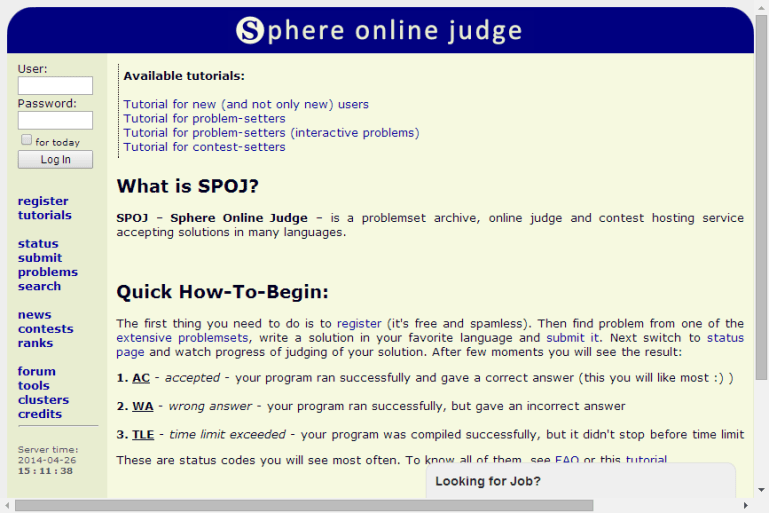
SPOJ(Sphere Online Judge)
Sphere Online Judge – is a problemset archive, online judge and contest hosting service accepting solutions in many languages.
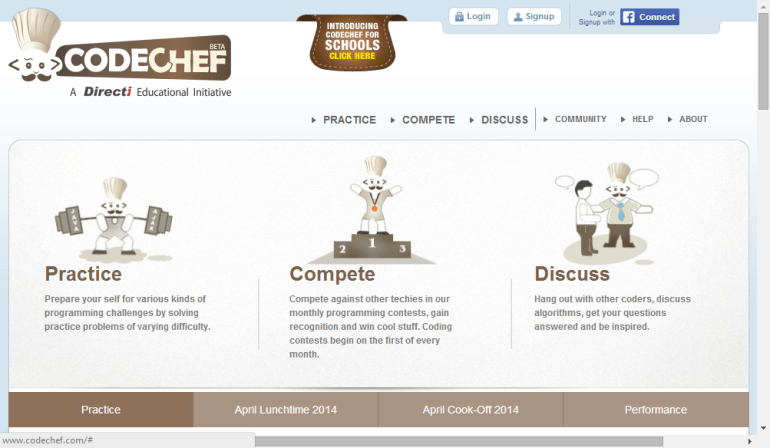
CODECHEF
CodeChef is a global programming community. They host contests, trainings and events for programmers around the world.
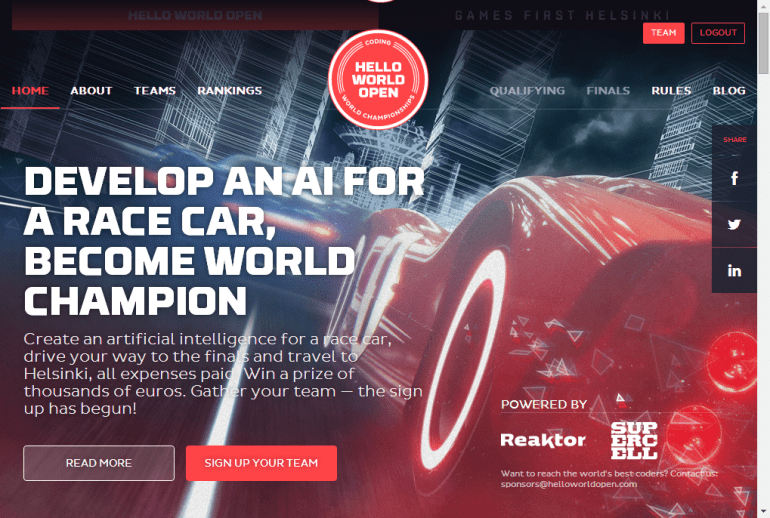
Hello World Open
Language independent resources.
Sites that ask to solve problems and provide the answer but do not obligate you to send source code.
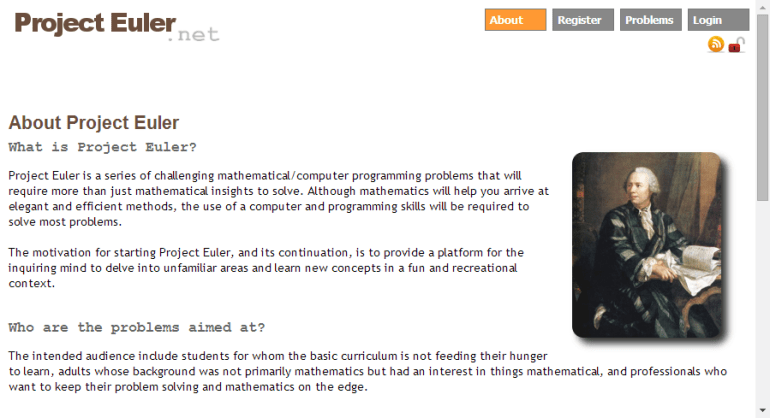
Project Euler
Project Euler is a series of challenging mathematical/computer programming problems that will require more than just mathematical insights to solve. Although mathematics will help you arrive at elegant and efficient methods, the use of a computer and programming skills will be required to solve most problems.
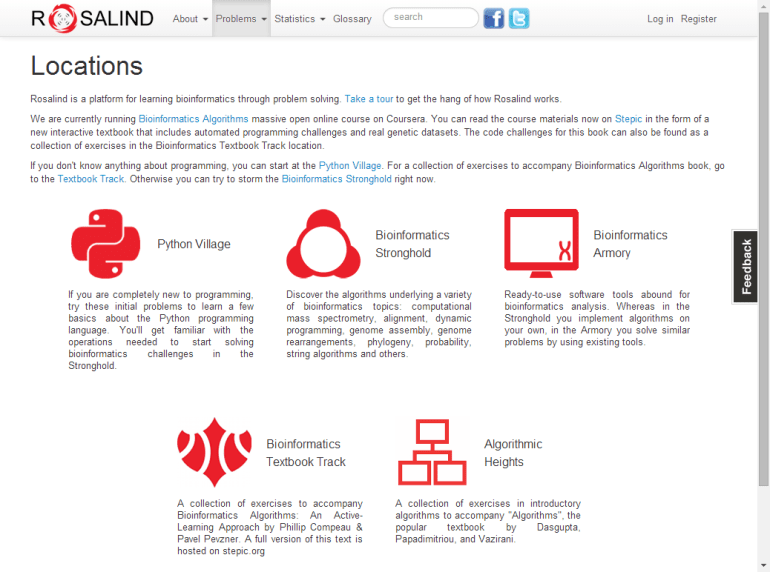
Rosalind
Rosalind is a platform for learning bioinformatics through problem solving.
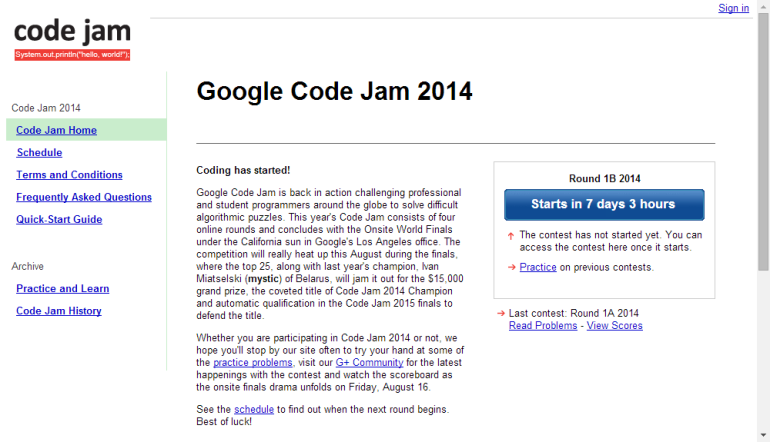
Google Code Jam
Google Code Jam is onсe a year competition. It is back in action challenging professional and student programmers around the globe to solve difficult algorithmic puzzles.
Kaggle
Kaggle is a platform for predictive modelling and analytics competitions on which companies and researchers post their data and statisticians and data miners from all over the world compete to produce the best models.
P.S. If you know other competitions or training sites that support F# please leave links in comments.
F# Weekly #16, 2014
![]() |
![]() |
![]() |
Welcome to F# Weekly,
A roundup of F# content from this past week:
News
- Visual F# Power Tools v0.6.0 was released with folder organization support, solution-wide renaming and enhanced syntax coloring.
- Please suggest new ideas for Visual F# Power Tools and vote for the existing ones.
- Nessos.Vagrant (A library that facilitates the distribution of code for the .NET framework) was presented.
- iFSharp Notebook v2.0-beta was released (an F# profile for iPython Notebook). Built-in Nuget support and more!
- FAKE supports OpenCover from now.
- Akka.NET Distributed Actor Framework – F# API v0.5.0 was released.
- FSock (simple C#/F# API for communicating async socket clients and servers) was presented.
- New F# meetup in Los Angeles area is starting next week.
- FsAttoparsec v0.1.0 (A port of Bryan O’Sullivan’s attoparsec from Haskell to F#) was released.
- “The benefits of functional programming in F# have given us a great advantage over our slow moving competitors.” by Bayard Rock.
- Find All References coming to the Visual F# Power Tools (completed).
- Tore Green shared source code of “Game of 2048” in F#.
- First stats from Google Code Jam 2014: there are some awesome guys who did it using F#.
- Want to have fun building an AI bot in F#? There is still one day to enter the HelloWorldOpen competition!
Video/Presentations
- “All Your Types Are Belong to Us!” by Phil Trelford.
- Porting Quake III to F#: A Journey to Functional Programming with Will Smith.
- “Property-based testing using FsCheck for F# and C#” by Akim Boyko (samples).
- “The F# Asynchronous Programming Model” by Don Syme, Tomas Petricek, Dmitry Lomov.
- “Cryptographically Verified Design and Implementation of a Distributed Key Manager” by Tolga Acar,Cedric Fournet, Dan Shumow.
Blogs
- Scott Hanselman posted “Open Source is a thankless job. We do it anyway.“.
- Jamie Dixon blogged “F# and the Open/Closed Principle“.
- Ross McKinlay wrote “Solving Puzzle Quest with F# Part 1“.
- Liam McLennan posted “State Machines in F# and C#“.
- Danny Tuppeny blogged “Is F# Ready for Production?“.
- Tim Jones published “Writing a MiniC-to-MSIL compiler in F# – Part 1 – Defining the abstract syntax tree“.
- Lawrence Woodman wrote “Beware of Immutable Lists for F# Parallel Processing“.
- Krzysztof Cieslak posted “F# Type Intoduction“.
- Sacha Barber wrote about:
- Sergey Tihon posted “Notes from .NET Meetup #4 & F# ad“.
- “The rise of functional programming in Banks” by Abdul Muhit.
- HSG published “F# – Marching Towards Top 10 Programming Languages“.
That’s all for now. Have a great week.
Previous F# Weekly edition – #15
Notes from .NET Meetup #4 & F# ad
Today I first visited an event from .NET User Group Minsk: .NET Meetup #4 in Imaguru startup hub. I was quite surprised by F# questions from audience!
The first speaker Dmitriy Gurskiy told us a history of creation EPAM‘s Microsoft Technology Radar (that is unfortunately not public yet). A first F# question was asked here “Where is F#(and all this functional stuff) on this radar?”. Alas, but F# was not there.
The second speaker Alius Petraška (a guest from Lithuania) showed up how to start developing with Windows Azure. Some technical issues with Wi-Fi were there, but it was funny.
The last and third speaker Maxim Paulousky shared news from BUILD 2014 and his impressions from this event. At the end of his talk, he also got some questions about F#: “What was announced about F#?”, “What plans Microsoft has for F#?” and “Why we do not have F# projects in Minsk?”.
It was really unexpected to hear so much interest to F#. Nice to know that F# is interesting for people.
For those who interested in F#, I want to tell that we have Minsk F# User Group: you can join us on meetup.com, join our Facebook group, join our Skype group or follow #fsharp on Twitter.
P.S. Thank for the event to all organizers. It was cute.